


1. Why Sustainable Amazon Growth Requires More Than a Hero Product
A leading natural beauty brand reached an inflection point: 57% of total Amazon revenue was concentrated in a single hero SKU. While performance remained strong in the short term, the model created structural risk, driving inefficient ad spend, limiting repeat-purchase leverage, and exposing the brand to category volatility and competitive pressure.
In partnership with Straight Up Growth, the brand transitioned from single-SKU dependence to a diversified, portfolio-driven growth strategy, unlocking more resilient, scalable performance across Amazon.
This blog outlines the diversification framework behind that transformation and why catalog-level strategy is essential for long-term stability on Amazon.
2. When a Hero SKU Becomes a Liability
Hero products can accelerate early growth, but overreliance often signals underlying inefficiencies. Our initial diagnostics focused on identifying where concentration was limiting scalability and margin expansion.
Key Diagnostic Findings
- Disproportionate revenue concentration in one top-performing SKU
- Underinvestment in high-repeat, mid-funnel SKUs
- Advertising is weighted heavily toward research and discovery terms
- Increasing category saturation and pricing compression
Why This Matters
These conditions suppress organic growth potential, increase dependency on paid media, and elevate risk when demand patterns shift. Without diversification, incremental growth becomes more expensive and less predictable over time.
3. Our Strategic Framework for Diversifying Revenue
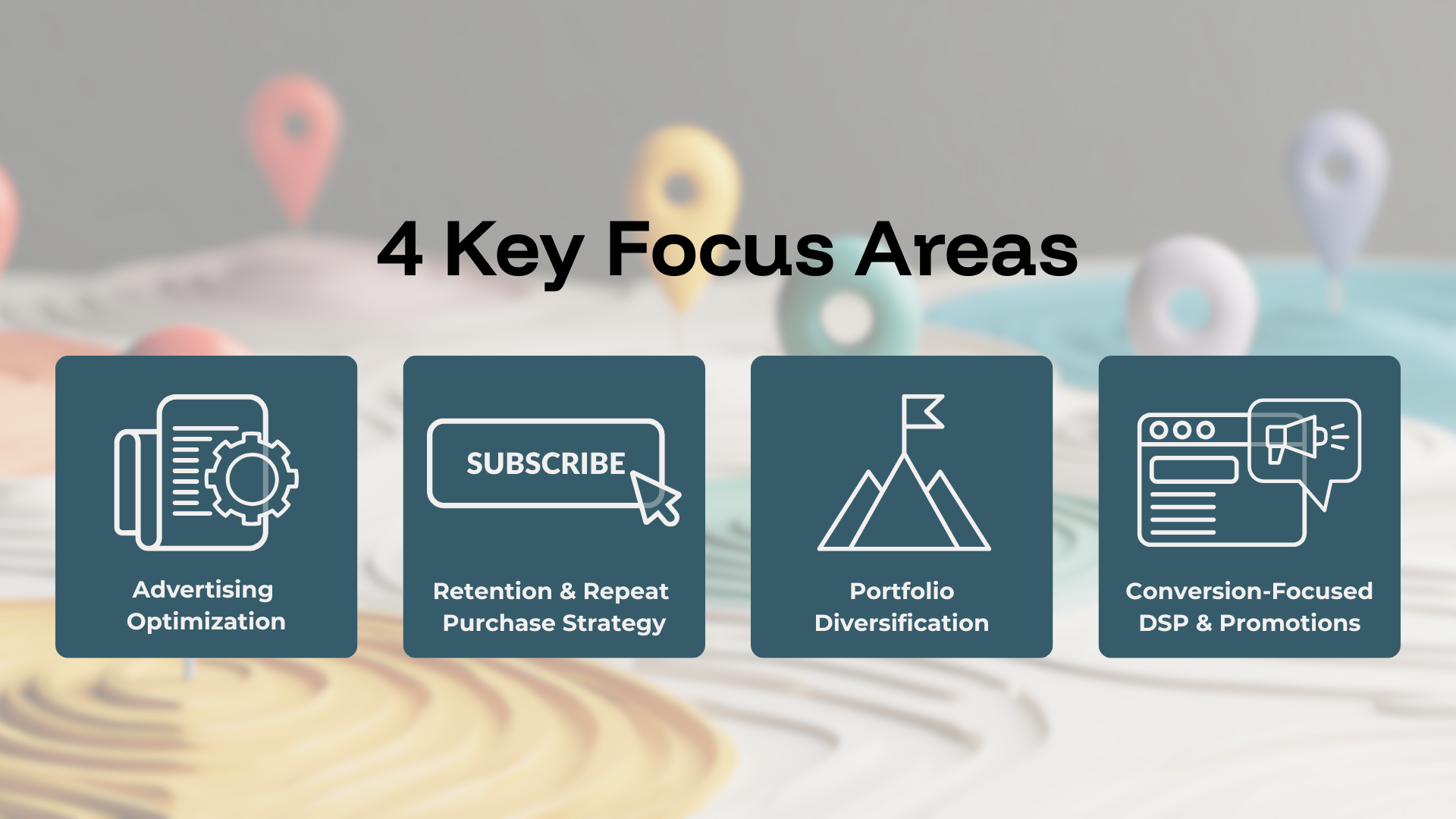
To rebalance growth, we deployed a four-part strategic framework designed to expand revenue contribution across the catalog while improving efficiency and repeat behavior.
1. Advertising Optimization
- From Research to Revenue: Reallocating spend toward exact-match, high-intent terms improved organic ranking across priority category keywords.
- Waste Reduction: Shifting the budget away from broad research terms reduced wasted spending to approximately 5%.
- Keyword Consolidation: Streamlined keyword architecture helped distribute demand across multiple SKUs, strengthening non-hero visibility.
2. Retention and Repeat-Purchase Acceleration
- High-Repeat Identification: Sales and cohort analysis surfaced SKUs with the strongest repurchase signals.
- Layered Retention Strategy: Subscribe & Save, reorder prompts, and DSP retargeting worked together to capture repeat demand and increase lifetime value.
3. Catalog Diversification Strategy
- Velocity-Based Prioritization: Products with proven velocity were elevated to increase their revenue contribution.
- Budget Rebalancing: Investment shifted from single-SKU dominance toward full-catalog strength.
- Predictive SKU Modeling: Data-driven forecasting guided prioritization and reduced reliance on reactive optimization.
4. Conversion-Focused DSP and Promotions
- High-Intent Audiences: DSP targeted shoppers who viewed but did not convert, as well as prior purchasers, with tailored messaging.
- Promotion Amplification: Monthly promotions paired with DSP created compounding lifts in both sales and ROI.
- Lower-Funnel Impact: Media and offers reinforced consideration and conversion at critical decision points.
4. Execution Playbook — How We Brought the Strategy to Life
The strategy was implemented through a phased optimization approach. We began with a complete portfolio and search-term audit, shifting spend from research-heavy terms to exact-match keywords supported by custom reporting across Amazon Ads, Brand Analytics, and DSP.
Early gains in efficiency, reduced wasted spend, improved organic rankings, and stronger repeat signals validated the approach. Budgets were then scaled into high-performing keywords, high-repeat SKUs, and bottom-funnel DSP audiences.
Throughout execution, we partnered closely with the brand team on promotions, pricing, and inventory planning, while aligning with Amazon Ads resources to ensure optimizations were scalable and built for long-term portfolio growth.
5. The Measurable Change Created by Our Work
The shift from hero-SKU dependence to portfolio-level optimization delivered material performance gains:
- Catalog Contribution Expansion: Increased from 43% to 74%, reflecting stronger revenue distribution across SKUs
- Monthly Run Rate Growth: Up 83%, signaling sustained acceleration rather than isolated wins
- Improved Ad Efficiency: Margin gains unlocked reinvestment opportunities across the funnel
- Market Share Expansion: Market share terms outside the hero SKU doubled, significantly improving discoverability
6. Looking Ahead: Building an Ecosystem for Long-Term Growth
To maintain momentum, we recommend:
- Expanding into complementary subcategories to unlock incremental demand
- Strengthening retention loops to increase lifetime value and stabilize revenue
- Leveraging cross-promotion and bundling to drive discovery and basket expansion
- Preparing future launches with predictive modeling and integrated media planning
Together, these initiatives create a scalable ecosystem that supports both near-term performance and long-term market leadership.
7. Why Diversification Wins on Amazon
Diversified portfolios reduce risk, improve efficiency, and create more predictable growth. Brands that rely on a single product, or a single growth lever, remain vulnerable to competitive shifts and rising costs. Portfolio-level strategy builds resilience, unlocks scale, and positions brands to win over time.
Explore the complete case study to see how Straight Up Growth helps brands move beyond hero products and build sustainable Amazon growth through data-driven diversification.
Schedule a free audit to assess your portfolio risk and growth potential.